
Another long silence again on the blog here I see. Finals are approaching and I've been caught in a deluge of papers and podcasts (the latter for Arabic class) in between being really ill. Earlier this week I got a nasty case of food poisoning AND we had a hot weather snap so I was puking my guts out in 100+ degree weather. Ok, yes I'm being a bit of a drama queen, but it sucked and it actually was that hot!
Now I seem to have recovered for the most part and am buckling down to do my finals, so bear with me in my distraction, and possibly read my entry from last semester about surviving finals: Ho, Ho, Ho Habbi. Yes I know, but it was December at the time and going home for Christmas was on my mind!
My last round of sickness was both the sickest I've been in years and definitely the most in Cairo, which has killed some of the novelty factor for me over here. I have never been so sick so often in my life as my time in Cairo, which sucks but the place is rough on the body. Or at least for us pink, squishy things that grew up in the mild and lovely Seattle! It's always been the case that I've been afraid to leave Egypt, as though if I blinked the memories might be erased in an instant. There is some truth in that the memories will fade with time and lack that certain emotional depth they once carried and felt so important at the time, but that's simply life and I'm starting to be able to look on the rather bright side of coming home. I wasn't anticipating a new level of adjustment a year into living here, but perhaps this is just the first phase of the adjust back to life in America.
What's starting to kill things for me in particular as well is the weather. I was raised in a MILD climate, people. I cannot take 100 degree weather all the time in any form except lying down in an air-conditioned box. Someone needs to tell this to the Egyptian summer weather! Winter is perfect, I haven't got a problem with it and being covered up isn't a big deal or uncomfortable during the winter, so dealing with social norms about dressing is never stressful. My only condolance is that on July 28 I will be flying back to lovely, mild Seattle for awhile to visit my parents before going back to California, because here in Cairo it will just be getting hotter and hotter.
Otherwise, life is going on as usual! I have an article coming out in Gilded Serpent soon about a teacher and friend here, Hallah Moustafa so stay tuned.
Thursday, May 13, 2010

Sunday, May 2, 2010
Egypt Fashion
A question I got asked quite a bit when I came home to the US this past winter was, "what do you wear in Egypt?" which is a completely different question from "what do people wear in Egypt?" but hints at that. I think it's time to answer both on the blog, so that people get to know something they're curious about, and people thinking to travel here get a better idea of how to blend in and dress appropriately.
On the Street in Cairo
-Locals:
Men: Doormen, some laborers, some small shop-owners will wear a garment like a long robe or shirt called a galabeya which falls to the feet with whatever shoes. Most Cairo guys on the street wear jeans (of the semi-not-total-ball-crushing variety) and a T-shirt or casual collared work shirt in either long or short sleeves or a full-on suit if going to work. Young men usually stick to jeans and a T-shirt with sneakers almost unanimously. If they're real local they LOVE their fake designer-wear. If you're wearing a suit you better have some pointy-ish black leather shoes with either squared off or truly pointy toes. Extra local points if they're dusty and turn up at the tips from a rigorous life. Shibshib is what we call the Egyptian version of flipflops and they are considered very casual wear, mainly worn around the house, so not many men wear these outside and barely any women except in the poorer areas as it's a bit like going out in your sweatpants in the US. Because of that you can sometimes see people going around in shibshib, but not if they're going much farther than down the street to the store.
Women *: Here there is a huge mix, which you can see if you ride the women's car on the Metro. Many young women wear hijab here, but they also dress in often very colorful, tight clothing. The tightness seems immodest, so I don't exactly understand it except as a way to somehow make the clothes fit in with "modern" western clothing more. Matching is very popular, down to the accessories, no matter what esoteric hue they might be, so you can often see young hijabii girls rocking an outfit in 2-3 colors around town in a very fashionable way to them, which I as a Westerner could never pull off. Colors are matched from the (often layered) headscarves, to bangles, to footwear. Long, A-line or trumpet skirts are popular here (but not to the exclusion of pants which are usually skinny jeans on the younger girls), including in denim, which I thought was cute enough to buy a couple. Older women usually will wear simple long pants or skirts and blouses or long casual dresses like the male galabeyas, but a bit more form-fitting. Oddly enough it's my impression that is a generation of older women present in Cairo that don't veil possibly because of the events during their lives when the veil was considered "backward" or restraining. Few women wear complete veils, but maybe 3/4ths cover their hear. During the winter many girls were wearing skirts at the knee with tights or pants under tucked into cute ankle or knee boots.
*Please note: The veiling issue is very complicated and women on an individual basis have many different opinions and feelings about their personal choices regarding to be veiled or not. There are many works of scholarship out there about what veiling means or doesn't mean, but I think the most important point is to try and understand what veiling means to the individual and react to it on an individual basis, not on the penalty of assigning group homogeneity. There's my two cents! Lots of info out there for people to check out!
-Foreigners:
Women: Women are pretty safe in most major areas wearing long jeans, pants, or a skirt which falls beneath the knees; and any shirt that has at least short-sleeves. Sleeveless is a no-go, or at least throw a scarf or shrug on over your shoulders. Anything that shows much cleavage is probably best left at home or to other areas to be discussing following this section. No short shorts. Ever. Sensible footwear is good as the streets can go back and forth from sidewalks to none, to an inch of sand, to rubble, to puddles. However, Cairo is a major city, so impractical, flashy footwear and short heels will make you blend in more.
I typically wear: I have a certain way of dressing that I consider a baseline of modesty to go on when in Cairo or traveling in Egypt in general. It's important to wear long pants or skirts, and keep your arms partially covered, so I usually wear jeans and a T-shirt with a 3/4 sleeve shrug over, cute ballet flats for around town, or short wooden heels if I'm going to school or getting around on my own. If someone is driving me, I will wear heels if I know for sure we won't be walking far or taking the subway.
Men: Foreign guys pretty much wear what Egyptian men wear, with the exception that shorts are probably best left at home if you want to blend in at all, and the foreigners are usually the ones wearing more baseball caps than Egyptian guys because the latter don't like to mess up their carefully gelled hair-dos.
Nightlife and Clubbing in Cairo
There is no distinction between foreigner/local wear at clubs in Cairo, because the kind of Cairenes who go out to clubs are usually pretty westernized, international, and not conservative. I think most of my Cairo friends are conservative enough to not go clubbing, or they keep it to mainly dance-themed things like Salsa nights which are a bit more fun and innocent in a way than a hip-hop club or a belly dance cabaret.
Women: Hiiiigh heels, skinny jeans, mini-skirts, skanky earthquake-inducing tops--pretty much the same as the US. You will probably never see a Hijab while out clubbing, or if you do the girl wearing it is probably not going to be flouncing around like she owns the place as the truly outrageous Cairo girls do. I have seen Hijabii women out salsa dancing though, but not much in hip hop clubs or some of the racier venues. Egyptian ladies certainly like to dress it up, and then some though. And hey, why not? Egyptian girls are gorgeous! Us foreigners just drag out one of the two clubbing tops we brought "on the off chance I would be on the Red Sea or something.." and jeans. The key to getting in and out without being ogled to death on the street? Shrugs, scarves, jackets, getting rides from a friend or jumping into a taxi promptly after exiting any building, and large purses in which to stash a change of clothes to switch into in the bathroom!
Guys: Um...not much new here, jeans and T-shirts. Big watches.
Weddings in Cairo:
Guys: Suits, many suits. I've seen shiny platinum-colored ones, but most are basic black or navy with a tie that goes with it nicely.
Ladies: Huuuge variety here. Weddings are a bit of a chance for people to let their hair down as they're just around family and friends usually, which shows in women's outfits. You can see sleeveless and strapless dresses here on non-hijabii women from the mid-thigh to full-length ballgowns. It's always good to bring a scarf or shrug though in case you get a bit self-conscious and for walking to/from the car. The hijabii ladies just throw on a mesh long-sleeved turtleneck undershirt and are good to go! The bride will usually wear the hugest cupcake dress she can manage while still being able to actually dance, with a slightly-less-huge veil. It's adorable in a "awww, I fantasized about that as a little girl!" way. Usually the sisters of the couple will be in full-on gowns hovering around offering tissues and carrying stuff for the bride, while the mothers of the couple stalk around in pant suits beaming and joking for some reason. I don't get the pantsuits, not the beaming and joking of course.
At AUC:
Boys (there are no men at AUC except professors): The foreign guys obviously wear whatever they would wear at their home college. Egyptian guys like their designer shades, their brightly-colored T-shirts over carefully worked abs and biceps of a size that makes them walk around with their arms always slightly bent, designer jeans, designer sneakers. Huge, expensive, imported watches. They can afford it because this is the most expensive college in Egypt. Even the more modest guys are usually a bit better dressed than in the US, sticking to smart short-sleeve, button-down shirts and designer glasses. There is definitely a uniquely AUC fashion trend that's hard to put your finger on until you come here. Oh, also Egyptian guys wouldn't be caught dead carrying more than one single notebook at a time, if that.
Girls: Again, the foreigner girls wear whatever they would at their home college. The Egyptian girls at AUC are usually decked out in a way that makes foreign male tongues wag and foreign females roll their eyes. There is a specific co-ed group called the "Guccis" that everyone refers to as the absolute consumer-whoreist group of students at AUC and who are the butt of every joke, but besides them the girls in AUC generally make me wish I: a) had Egyptian genes, b) a lot of money, c) could actually justify buying skinny jeans, d) had more time in the morning to look like something other than a colossal wreck e) a driver so I could wear whatever I wanted without worrying about the gauntlet of the open street. Skinny jeans are prevalent. Everyone carries large purses instead of backpacks. They can afford to get their hair "did" regularly and stuff waxed and plucked to perfection. They look fabulous, and that sucks because Egypt hates my skin and my body generally.
On the Red Sea:
The Red Sea is home to many major tourist towns, and I think they've pretty much seen it all. Women can wear bikinis on the beach or in the club (which is also on the beach), or a mini-skirt, or tank-top. No one cares enough to give you crap or really say much about it, although expect the Egyptian males around to give you "a look" in a certain way at times. Again, guys pretty much wear...yep, jeans and a T-shirt or a T-shirt and swim trunks on the beach or even in the club.
Alexandria:
I wouldn't say Alexandria is much more conservative than Cairo per-say, but I haven't spent much time there. There are certain beaches you can wear bikinis, but beware strong surf causing boob-escapage (seriously, been there). When in doubt, throw on a long T-shirt over your suit and you're good to go! I'm not even going to mention guys this time, too boring. Otherwise I would say just do as you do in Cairo, although somehow I got away with wearing a tank-top one night, but I was accompanied by an Egyptian guy friend.
On the Street in Cairo
-Locals:
Men: Doormen, some laborers, some small shop-owners will wear a garment like a long robe or shirt called a galabeya which falls to the feet with whatever shoes. Most Cairo guys on the street wear jeans (of the semi-not-total-ball-crushing variety) and a T-shirt or casual collared work shirt in either long or short sleeves or a full-on suit if going to work. Young men usually stick to jeans and a T-shirt with sneakers almost unanimously. If they're real local they LOVE their fake designer-wear. If you're wearing a suit you better have some pointy-ish black leather shoes with either squared off or truly pointy toes. Extra local points if they're dusty and turn up at the tips from a rigorous life. Shibshib is what we call the Egyptian version of flipflops and they are considered very casual wear, mainly worn around the house, so not many men wear these outside and barely any women except in the poorer areas as it's a bit like going out in your sweatpants in the US. Because of that you can sometimes see people going around in shibshib, but not if they're going much farther than down the street to the store.
Women *: Here there is a huge mix, which you can see if you ride the women's car on the Metro. Many young women wear hijab here, but they also dress in often very colorful, tight clothing. The tightness seems immodest, so I don't exactly understand it except as a way to somehow make the clothes fit in with "modern" western clothing more. Matching is very popular, down to the accessories, no matter what esoteric hue they might be, so you can often see young hijabii girls rocking an outfit in 2-3 colors around town in a very fashionable way to them, which I as a Westerner could never pull off. Colors are matched from the (often layered) headscarves, to bangles, to footwear. Long, A-line or trumpet skirts are popular here (but not to the exclusion of pants which are usually skinny jeans on the younger girls), including in denim, which I thought was cute enough to buy a couple. Older women usually will wear simple long pants or skirts and blouses or long casual dresses like the male galabeyas, but a bit more form-fitting. Oddly enough it's my impression that is a generation of older women present in Cairo that don't veil possibly because of the events during their lives when the veil was considered "backward" or restraining. Few women wear complete veils, but maybe 3/4ths cover their hear. During the winter many girls were wearing skirts at the knee with tights or pants under tucked into cute ankle or knee boots.
*Please note: The veiling issue is very complicated and women on an individual basis have many different opinions and feelings about their personal choices regarding to be veiled or not. There are many works of scholarship out there about what veiling means or doesn't mean, but I think the most important point is to try and understand what veiling means to the individual and react to it on an individual basis, not on the penalty of assigning group homogeneity. There's my two cents! Lots of info out there for people to check out!
-Foreigners:
Women: Women are pretty safe in most major areas wearing long jeans, pants, or a skirt which falls beneath the knees; and any shirt that has at least short-sleeves. Sleeveless is a no-go, or at least throw a scarf or shrug on over your shoulders. Anything that shows much cleavage is probably best left at home or to other areas to be discussing following this section. No short shorts. Ever. Sensible footwear is good as the streets can go back and forth from sidewalks to none, to an inch of sand, to rubble, to puddles. However, Cairo is a major city, so impractical, flashy footwear and short heels will make you blend in more.
I typically wear: I have a certain way of dressing that I consider a baseline of modesty to go on when in Cairo or traveling in Egypt in general. It's important to wear long pants or skirts, and keep your arms partially covered, so I usually wear jeans and a T-shirt with a 3/4 sleeve shrug over, cute ballet flats for around town, or short wooden heels if I'm going to school or getting around on my own. If someone is driving me, I will wear heels if I know for sure we won't be walking far or taking the subway.
Men: Foreign guys pretty much wear what Egyptian men wear, with the exception that shorts are probably best left at home if you want to blend in at all, and the foreigners are usually the ones wearing more baseball caps than Egyptian guys because the latter don't like to mess up their carefully gelled hair-dos.
Nightlife and Clubbing in Cairo
There is no distinction between foreigner/local wear at clubs in Cairo, because the kind of Cairenes who go out to clubs are usually pretty westernized, international, and not conservative. I think most of my Cairo friends are conservative enough to not go clubbing, or they keep it to mainly dance-themed things like Salsa nights which are a bit more fun and innocent in a way than a hip-hop club or a belly dance cabaret.
Women: Hiiiigh heels, skinny jeans, mini-skirts, skanky earthquake-inducing tops--pretty much the same as the US. You will probably never see a Hijab while out clubbing, or if you do the girl wearing it is probably not going to be flouncing around like she owns the place as the truly outrageous Cairo girls do. I have seen Hijabii women out salsa dancing though, but not much in hip hop clubs or some of the racier venues. Egyptian ladies certainly like to dress it up, and then some though. And hey, why not? Egyptian girls are gorgeous! Us foreigners just drag out one of the two clubbing tops we brought "on the off chance I would be on the Red Sea or something.." and jeans. The key to getting in and out without being ogled to death on the street? Shrugs, scarves, jackets, getting rides from a friend or jumping into a taxi promptly after exiting any building, and large purses in which to stash a change of clothes to switch into in the bathroom!
Guys: Um...not much new here, jeans and T-shirts. Big watches.
Weddings in Cairo:
Guys: Suits, many suits. I've seen shiny platinum-colored ones, but most are basic black or navy with a tie that goes with it nicely.
Ladies: Huuuge variety here. Weddings are a bit of a chance for people to let their hair down as they're just around family and friends usually, which shows in women's outfits. You can see sleeveless and strapless dresses here on non-hijabii women from the mid-thigh to full-length ballgowns. It's always good to bring a scarf or shrug though in case you get a bit self-conscious and for walking to/from the car. The hijabii ladies just throw on a mesh long-sleeved turtleneck undershirt and are good to go! The bride will usually wear the hugest cupcake dress she can manage while still being able to actually dance, with a slightly-less-huge veil. It's adorable in a "awww, I fantasized about that as a little girl!" way. Usually the sisters of the couple will be in full-on gowns hovering around offering tissues and carrying stuff for the bride, while the mothers of the couple stalk around in pant suits beaming and joking for some reason. I don't get the pantsuits, not the beaming and joking of course.
At AUC:
Boys (there are no men at AUC except professors): The foreign guys obviously wear whatever they would wear at their home college. Egyptian guys like their designer shades, their brightly-colored T-shirts over carefully worked abs and biceps of a size that makes them walk around with their arms always slightly bent, designer jeans, designer sneakers. Huge, expensive, imported watches. They can afford it because this is the most expensive college in Egypt. Even the more modest guys are usually a bit better dressed than in the US, sticking to smart short-sleeve, button-down shirts and designer glasses. There is definitely a uniquely AUC fashion trend that's hard to put your finger on until you come here. Oh, also Egyptian guys wouldn't be caught dead carrying more than one single notebook at a time, if that.
Girls: Again, the foreigner girls wear whatever they would at their home college. The Egyptian girls at AUC are usually decked out in a way that makes foreign male tongues wag and foreign females roll their eyes. There is a specific co-ed group called the "Guccis" that everyone refers to as the absolute consumer-whoreist group of students at AUC and who are the butt of every joke, but besides them the girls in AUC generally make me wish I: a) had Egyptian genes, b) a lot of money, c) could actually justify buying skinny jeans, d) had more time in the morning to look like something other than a colossal wreck e) a driver so I could wear whatever I wanted without worrying about the gauntlet of the open street. Skinny jeans are prevalent. Everyone carries large purses instead of backpacks. They can afford to get their hair "did" regularly and stuff waxed and plucked to perfection. They look fabulous, and that sucks because Egypt hates my skin and my body generally.
On the Red Sea:
The Red Sea is home to many major tourist towns, and I think they've pretty much seen it all. Women can wear bikinis on the beach or in the club (which is also on the beach), or a mini-skirt, or tank-top. No one cares enough to give you crap or really say much about it, although expect the Egyptian males around to give you "a look" in a certain way at times. Again, guys pretty much wear...yep, jeans and a T-shirt or a T-shirt and swim trunks on the beach or even in the club.
Alexandria:
I wouldn't say Alexandria is much more conservative than Cairo per-say, but I haven't spent much time there. There are certain beaches you can wear bikinis, but beware strong surf causing boob-escapage (seriously, been there). When in doubt, throw on a long T-shirt over your suit and you're good to go! I'm not even going to mention guys this time, too boring. Otherwise I would say just do as you do in Cairo, although somehow I got away with wearing a tank-top one night, but I was accompanied by an Egyptian guy friend.
Monday, April 26, 2010
Up the Nile: Day 8 (Abu Simbel)
This was the grand finale of my trip: The temples of Abu Simbel, on the edge of Lake Nasser, at sunrise. We were the only ones there, but sadly you can't take pictures inside of the most beautiful paintings yet on my trip. Walking alone through these temples gave me shivers!


Up the Nile: Day 7 (Aswan to Abu Simbel)
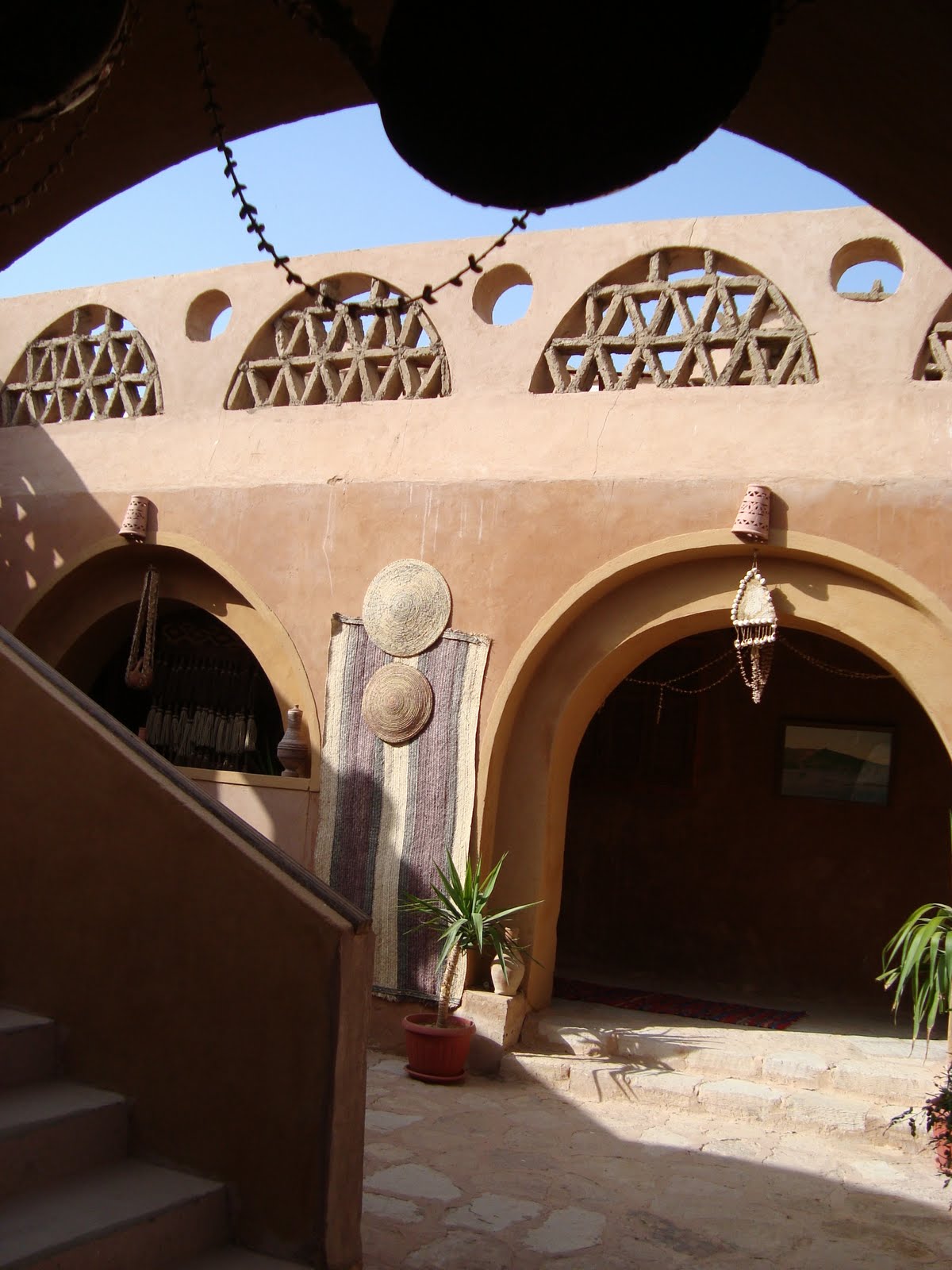
Here's pictures of the drive over the old dam, looking out over the rocky first cataract, and then through the desert to Abu Simbel. I stayed at the Nubian Culture House there, which was basically a lovely Nubian-style B&B with good food, music, decor, and scenery. We caught the sound and light show at the temples, which I hear is pretty much the only worthwhile one on the Nile Valley trek, and which I did enjoy a lot. I slid into my mosquito-netted bed to catch a few hours sleep before the last day of my vacation...


Wednesday, April 21, 2010
Dance, dance, more dance....Ilhamdulillah
Just as I was getting set to put up the last photos of my vacation, here we go again--internet outtage! This time, however it was the neighbors who hadn't paid their bill, not us (as we've been being moochers) so there wasn't much my room mate and I could do except check out email frantically in between classes at school.
My article is finally out on Gilded Serpent here, do check it out and leave a comment! The editing process took a lot longer than I thought, so I feel a bit silly finally posting the link here after giving that teaser piece of writing so long ago, but that's life I suppose. Part 2 is to come later, at some point, which is entirely up to the editor I think, and frankly I'd rather leave it in her hands anyway seeing as how I'm too busy to even do my laundry at the moment!
Return to Reda
I have had next to no free time lately pretty much owing to the fact that I accidentally joined the AUC folkloric dance troupe. I'm totally happy about it, of course, but it was a bit of an accident and has been fairly rigorous. That's especially in light of the fact that I joined up after they'd been working on choreography for a couple months and now am being asked to learn several choreographies by Mahmoud Reda in a very short amount of time. My legs hurt due to going from minimal dancing to over 7 hrs in two days, but don't let me fool you into not thinking I'm pleased to be doing this and working on these particular dances.
So how did I join accidentally? I was wandering around the deserted parts of AUC that no one hangs out in, as per usual, and happened to be walking by the dance studio when I saw someone doing tahtib or a man's stick dance from upper Egypt. So of course I stuck my head in after going back and forth in my mind about it for awhile, and asked the group inside how I could get the room unlocked so I could practice sometime, which is something I've been wondering for awhile. The girl whose attention I got told me you had to be a student organization--bummer! Oh well, nevermind, but since I had a bunch of free time at that moment I asked if I could stay and watch their practice, which I ended up doing and then being persuaded into joining once I let slip I had studied with Reda himself last summer at Nile Group. The trainer (who spoke no English) told me to come back the next practice, so I assumed I was pretty much in.
Thus begins my re-entry into studying Reda folkloric style, which is always fun and a good challenge. He has some lovely choreographies, and I do like the style more now that I "get it" from living in Egypt and seeing him teach. When I first took a workshop with him last summer everyone seemed miffed that we weren't learning "folkloric" style, but then I went and watched videos of the Reda troupe myself. What everyone at the workshop sniffed at and called "oriental" is actually completely folkore--don't let the elegance, arabesques, and fancy footwork fool you, this is real REDA folkoric style. As I recall from taking a workshop with Sahra Saeeda (the excellent dance ethnologist and just general authority on much folkloric style due to her research), Reda was always a bit famous for showing a very presentable, elegant style of folkloric dance that would honor the people it was showcasing and not portray them as in any way backward or simple, etc. Call it controversial or not, this is the style that the Reda troupe is famous for, and it's what I'm studying now and hopefully it can inform my oriental style a bit more too. In any case it's great practice and really fun, despite struggling through translations and orders given in Arabic!
Nile Group
I went to Nile Group a bit last week with Hallah Moustafa to sell costumes and hang out, which was a good time, aside from the lack of people because everyone typically comes for the June festival. It was actually pretty tragic how few people showed up compared to that one. It seems that Nile Group has perhaps stretched itself too far, because the vibe just wasn't as fun and exciting as the June festival I went to last year which was great because of the masses of people at the opening and closing parties, as well as the totally diverse group of dancers you would be with in a workshop.
Just to see a bit of the community, feel like part of an industry was fun though and it was nice to see some familiar faces. Lots of famous, semi-famous, and wannabe faces glided by over the week which was interesting. People watching at a dance festival is always good entertainment, if a bit discouraging to see how many big egos are being brandished around in between the few genuine kind souls. Gaby Shiba was good to see and was as always a total sweetheart, and I was reminded that--helloooo--he has a dance studio just a 10-minute walk away in my own neighborhood if I want private dabke lessons or even oriental style. No idea how I forgot about that when I've been meaning to drop by. Aleya, another American living and working here, was there quite a bit so we got to finally meet offline and face-to-face which was totally fun, and she wore one of Hallah's costumes for the open stage night. It was great to see Hallah's work as it's meant to be presented on-stage! I have an article coming out next month maybe on Hallah for Gilded Serpent, so stay tuned!
The last part of my vacation pictures in Abu Simbel are coming soon, just as soon as I can get the internet at home sorted out!
My article is finally out on Gilded Serpent here, do check it out and leave a comment! The editing process took a lot longer than I thought, so I feel a bit silly finally posting the link here after giving that teaser piece of writing so long ago, but that's life I suppose. Part 2 is to come later, at some point, which is entirely up to the editor I think, and frankly I'd rather leave it in her hands anyway seeing as how I'm too busy to even do my laundry at the moment!
Return to Reda
I have had next to no free time lately pretty much owing to the fact that I accidentally joined the AUC folkloric dance troupe. I'm totally happy about it, of course, but it was a bit of an accident and has been fairly rigorous. That's especially in light of the fact that I joined up after they'd been working on choreography for a couple months and now am being asked to learn several choreographies by Mahmoud Reda in a very short amount of time. My legs hurt due to going from minimal dancing to over 7 hrs in two days, but don't let me fool you into not thinking I'm pleased to be doing this and working on these particular dances.
So how did I join accidentally? I was wandering around the deserted parts of AUC that no one hangs out in, as per usual, and happened to be walking by the dance studio when I saw someone doing tahtib or a man's stick dance from upper Egypt. So of course I stuck my head in after going back and forth in my mind about it for awhile, and asked the group inside how I could get the room unlocked so I could practice sometime, which is something I've been wondering for awhile. The girl whose attention I got told me you had to be a student organization--bummer! Oh well, nevermind, but since I had a bunch of free time at that moment I asked if I could stay and watch their practice, which I ended up doing and then being persuaded into joining once I let slip I had studied with Reda himself last summer at Nile Group. The trainer (who spoke no English) told me to come back the next practice, so I assumed I was pretty much in.
Thus begins my re-entry into studying Reda folkloric style, which is always fun and a good challenge. He has some lovely choreographies, and I do like the style more now that I "get it" from living in Egypt and seeing him teach. When I first took a workshop with him last summer everyone seemed miffed that we weren't learning "folkloric" style, but then I went and watched videos of the Reda troupe myself. What everyone at the workshop sniffed at and called "oriental" is actually completely folkore--don't let the elegance, arabesques, and fancy footwork fool you, this is real REDA folkoric style. As I recall from taking a workshop with Sahra Saeeda (the excellent dance ethnologist and just general authority on much folkloric style due to her research), Reda was always a bit famous for showing a very presentable, elegant style of folkloric dance that would honor the people it was showcasing and not portray them as in any way backward or simple, etc. Call it controversial or not, this is the style that the Reda troupe is famous for, and it's what I'm studying now and hopefully it can inform my oriental style a bit more too. In any case it's great practice and really fun, despite struggling through translations and orders given in Arabic!
Nile Group
I went to Nile Group a bit last week with Hallah Moustafa to sell costumes and hang out, which was a good time, aside from the lack of people because everyone typically comes for the June festival. It was actually pretty tragic how few people showed up compared to that one. It seems that Nile Group has perhaps stretched itself too far, because the vibe just wasn't as fun and exciting as the June festival I went to last year which was great because of the masses of people at the opening and closing parties, as well as the totally diverse group of dancers you would be with in a workshop.
Just to see a bit of the community, feel like part of an industry was fun though and it was nice to see some familiar faces. Lots of famous, semi-famous, and wannabe faces glided by over the week which was interesting. People watching at a dance festival is always good entertainment, if a bit discouraging to see how many big egos are being brandished around in between the few genuine kind souls. Gaby Shiba was good to see and was as always a total sweetheart, and I was reminded that--helloooo--he has a dance studio just a 10-minute walk away in my own neighborhood if I want private dabke lessons or even oriental style. No idea how I forgot about that when I've been meaning to drop by. Aleya, another American living and working here, was there quite a bit so we got to finally meet offline and face-to-face which was totally fun, and she wore one of Hallah's costumes for the open stage night. It was great to see Hallah's work as it's meant to be presented on-stage! I have an article coming out next month maybe on Hallah for Gilded Serpent, so stay tuned!
The last part of my vacation pictures in Abu Simbel are coming soon, just as soon as I can get the internet at home sorted out!
Monday, April 12, 2010
Up the Nile: Day 6 (Aswan)
My last day in Aswan was reserved for seeing the normal tourist attractions, unlike the somewhat esoteric St. Simeon monastery. I met Farouk's group bright and early, and we started off driving out of Aswan and over the old dam, which has stunning views over the rocky first cataract area of the Nile. We took a quick gander at the High Dam, looking out over the Nile below and Lake Nasser--the largest artificial lake in the world I believe, which was created by the construction of the High Dam and destroyed the Nubian civilization as it once was. In addition, many monuments would have been under water without the intervention of UNESCO and other international actors. I'm sure there's reading out there to be done about the controversy of the dam and the problems it has created/solved.
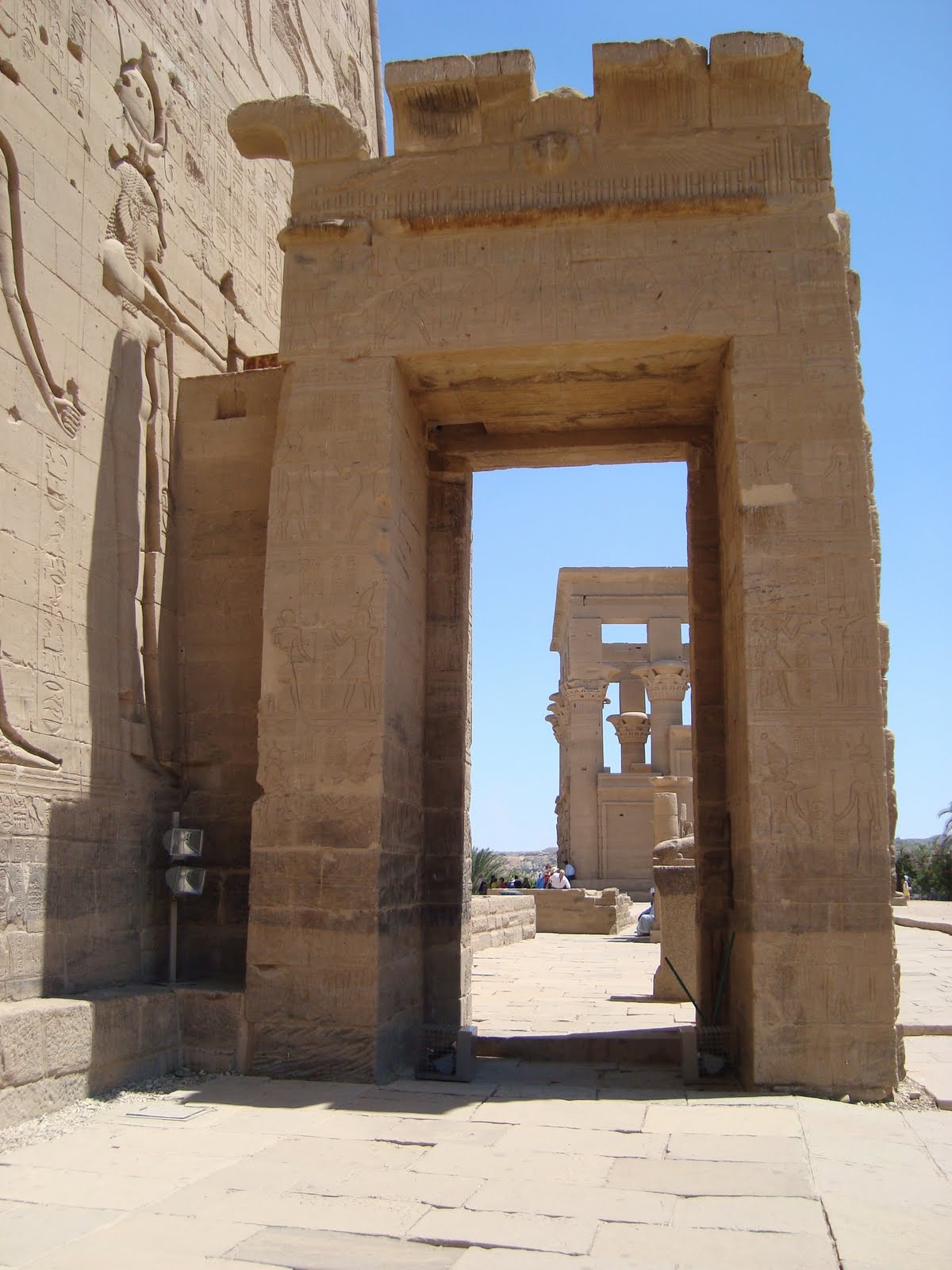
After our trip to the High Dam we headed down to the section of the Nile between the two dams to see the temple of Isis at Philae Island, which is one of sites that was moved and thus saved from being submerged permanently. The island it is now on has been landscaped and planted to resemble the original island, and the project was excellent at recreating the site without trying to restore it to former glory; just to present it how it was before it was moved.
On the way back into town we swung by the granite quarry which used to serve as the site for smashing out the massive stones the obelisks were made from. There is still an unfinished one left there, because a flaw was discovered in the stone (obelisks were made from one single piece of stone, so they had to be without any problems obviously) and thus it was discarded. If it had been finished, it would have been the largest obelisk we know of now!
Here are the pictures--as you can see, I was in love with the columns at the temple of Isis:




After our trip to the High Dam we headed down to the section of the Nile between the two dams to see the temple of Isis at Philae Island, which is one of sites that was moved and thus saved from being submerged permanently. The island it is now on has been landscaped and planted to resemble the original island, and the project was excellent at recreating the site without trying to restore it to former glory; just to present it how it was before it was moved.
On the way back into town we swung by the granite quarry which used to serve as the site for smashing out the massive stones the obelisks were made from. There is still an unfinished one left there, because a flaw was discovered in the stone (obelisks were made from one single piece of stone, so they had to be without any problems obviously) and thus it was discarded. If it had been finished, it would have been the largest obelisk we know of now!
Here are the pictures--as you can see, I was in love with the columns at the temple of Isis:




Subscribe to:
Posts (Atom)